Fiberglass water tank
Category
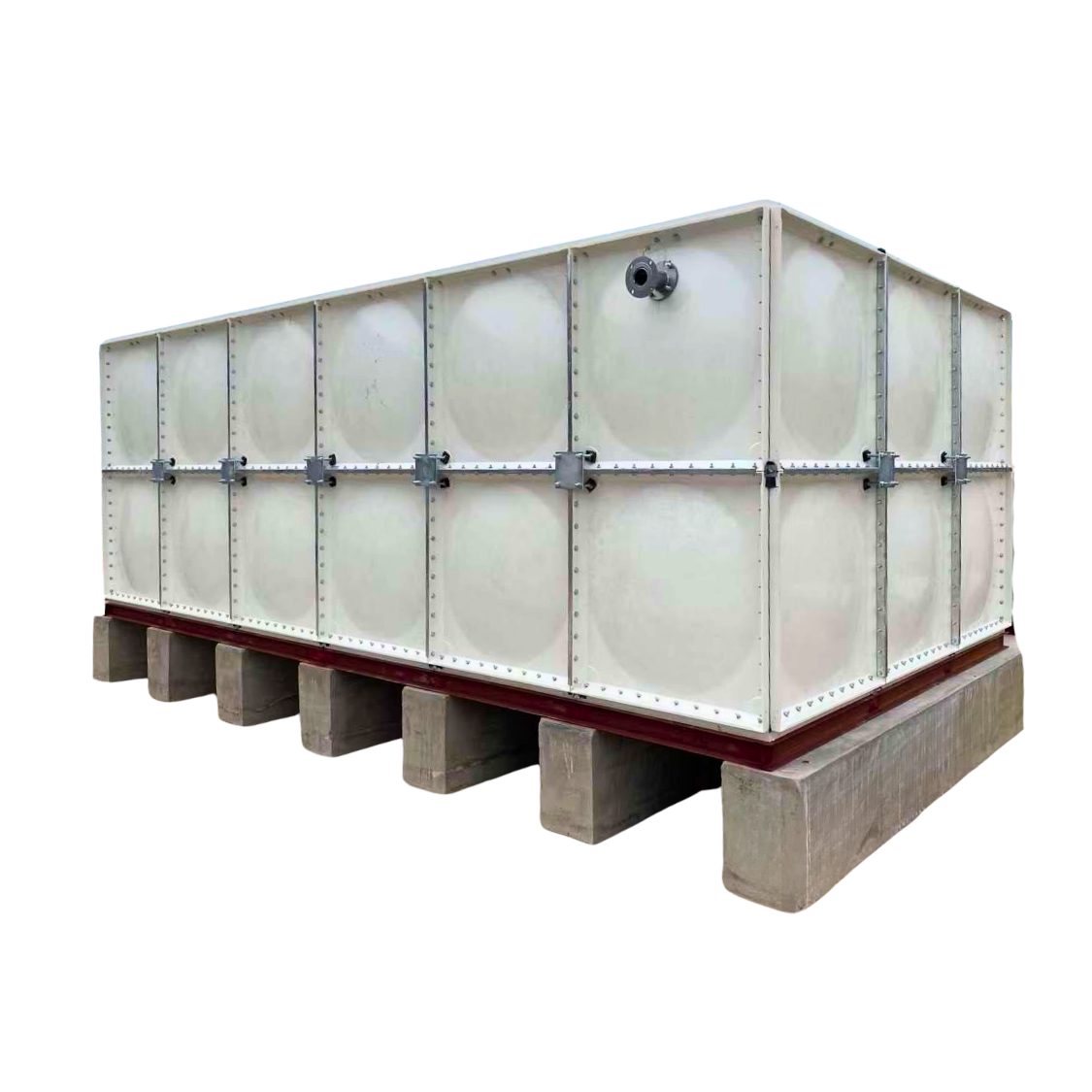
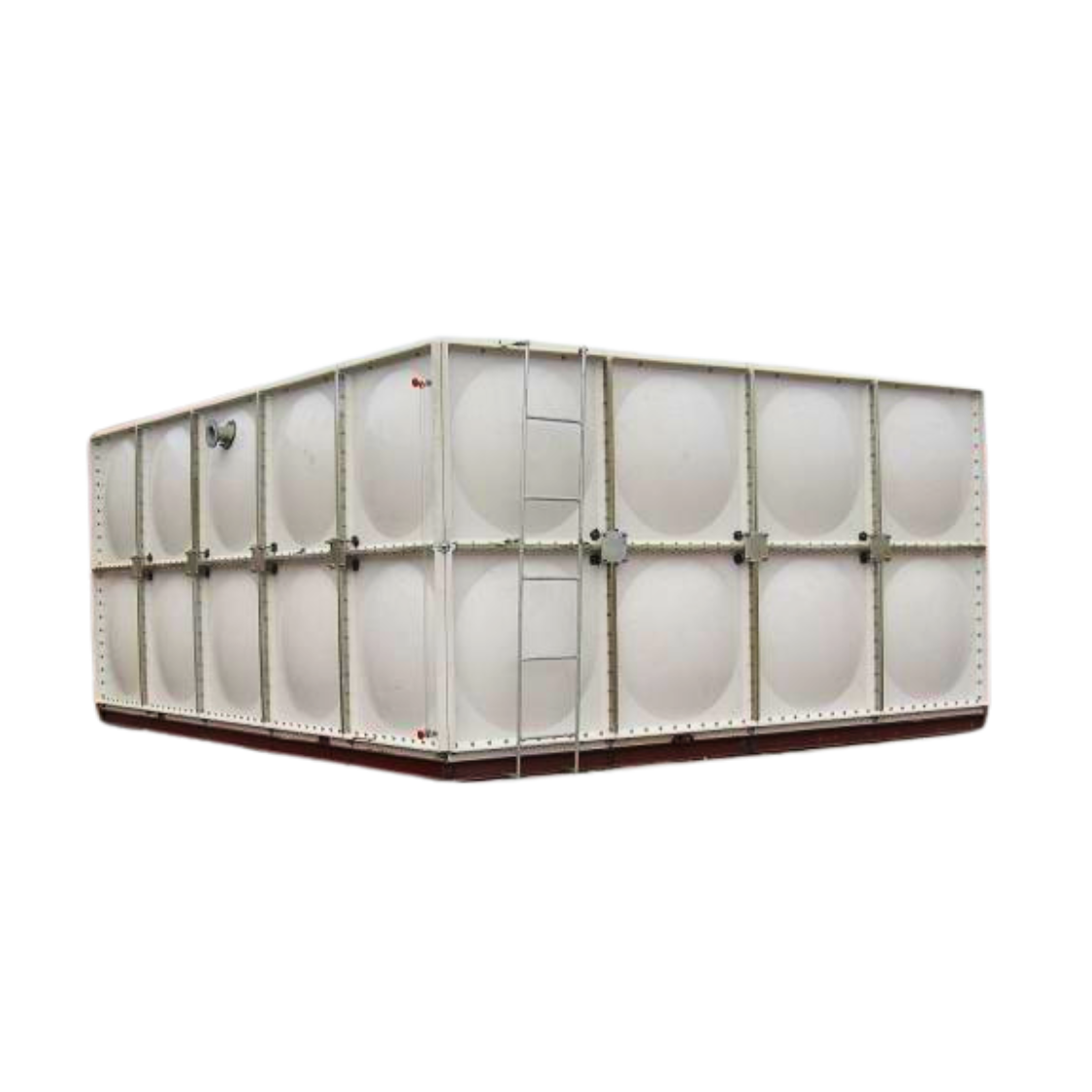
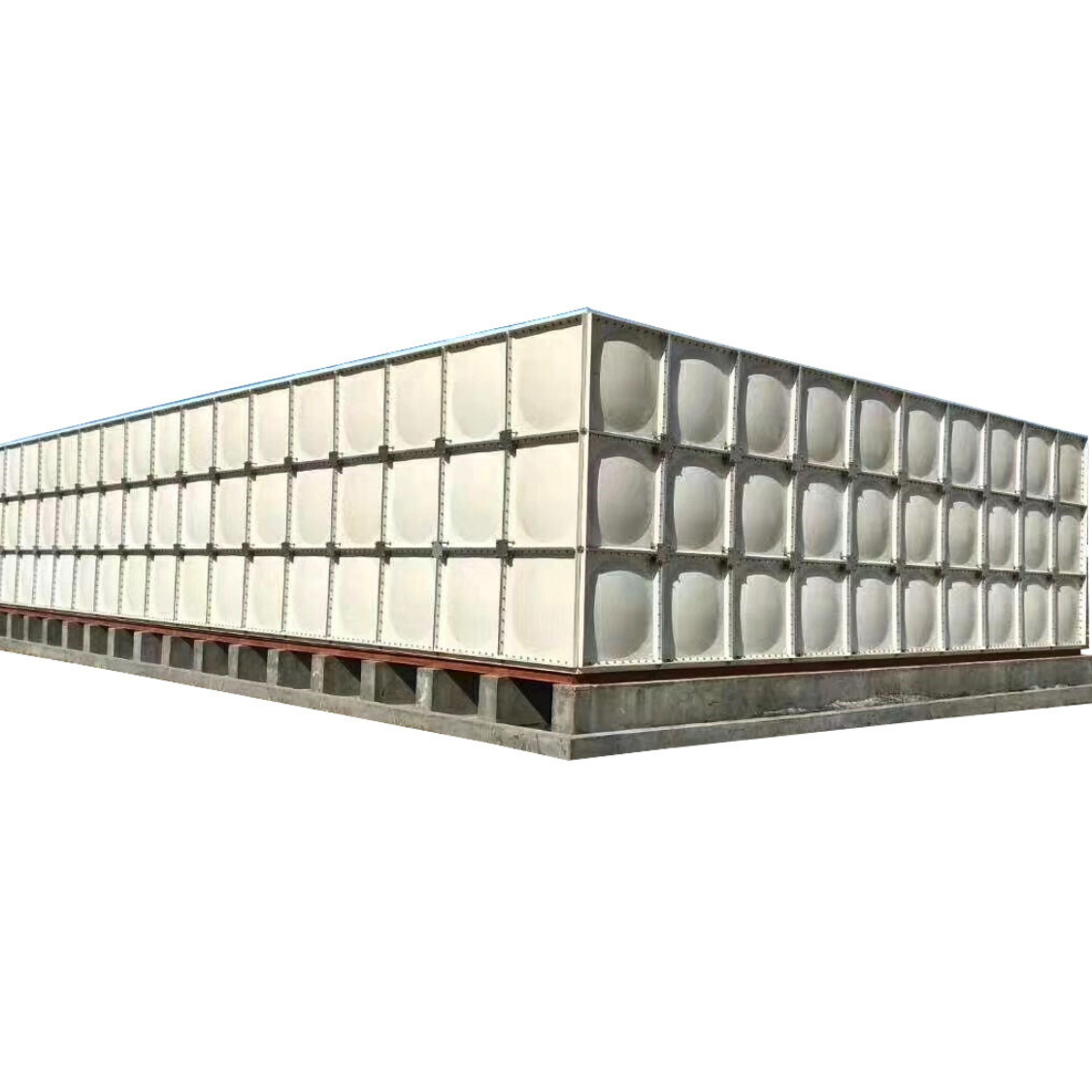
This fiberglass water tank is manufactured using SMC panels produced with food-grade resin, delivering safe contact with potable water and durable long-term performance.
Key features and advantages include:
- Food-grade SMC material reduces contamination risk and supports potable and light industrial water storage applications.
- Machine-pressed fabrication produces uniform panel density and predictable mechanical behavior under load.
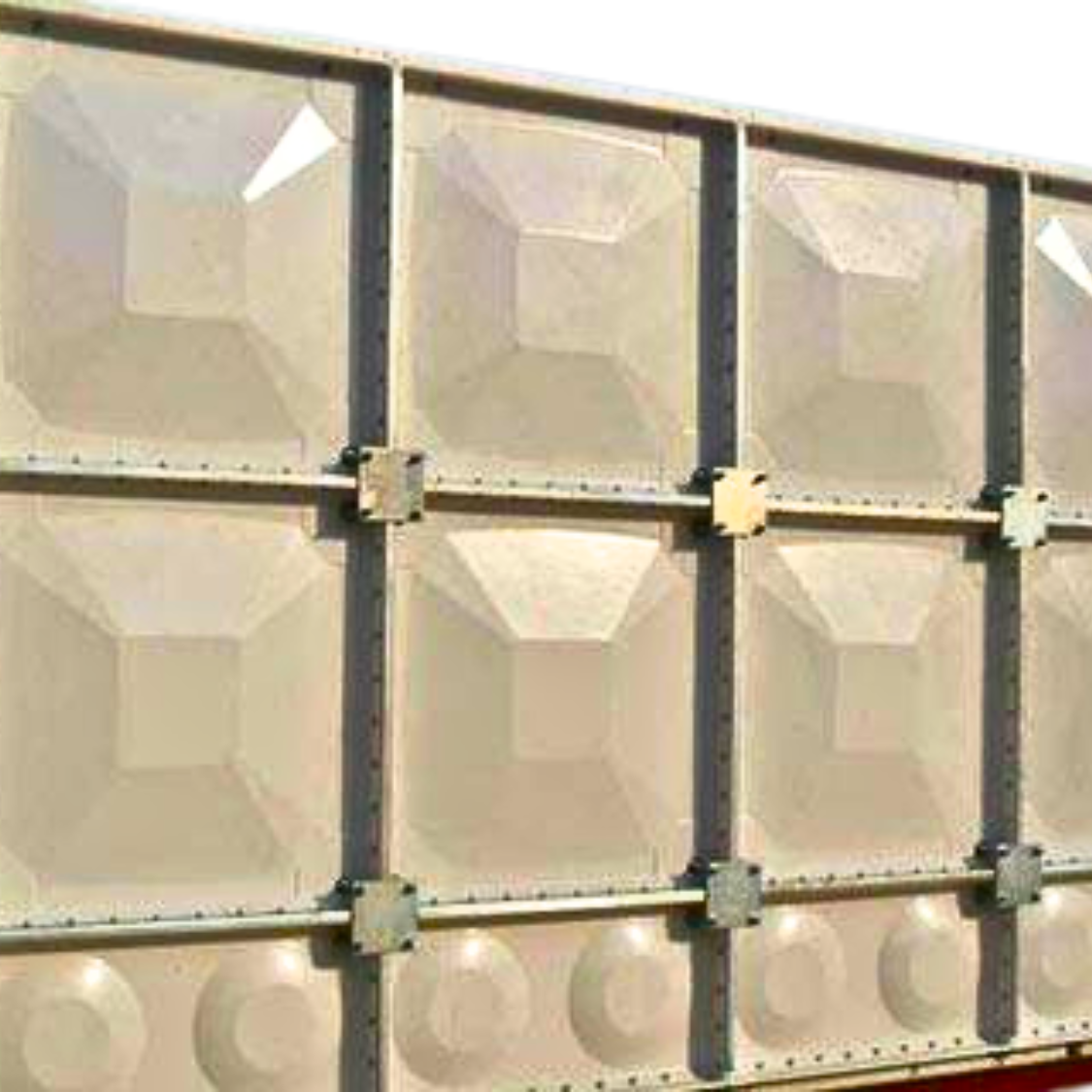
- Convex panel design enhances load distribution and increases per-panel capacity without increasing plan area.
- Flexible panel sizes such as 1000*1000 mm, 1000*500 mm and 500*500 mm enable field assembly into customized volumes that match project constraints.
- Custom packaging and transport planning reduces the risk of damage in transit and accommodates domestic and international shipping needs.
Applications
Typical applications for the fiberglass water tank span municipal, commercial, agricultural and industrial settings where modular, corrosion-resistant water storage is required.
Common use cases include potable storage, firefighting reserve, irrigation systems, process water buffering, and temporary storage for construction sites.
End users that benefit most are water utilities, property developers, agricultural operators, industrial maintenance teams and engineering contractors who need durable, adaptable tanks.
Assembly and installation are straightforward when following the recommended sequence: align panels, engage flanges, secure fasteners and perform seal verification.
Because corner connectors are not required, installers have greater flexibility to adapt to onsite tolerances; panels can be replaced individually for maintenance or capacity changes.
The use of food-grade resin in SMC panels supports compliance with potable water handling; customers should verify local regulatory requirements and request material certifications as needed.
SMC construction also minimizes corrosion, biological fouling and galvanic interactions that affect metal tanks, reducing long-term maintenance.
Our company develops tailored packaging and transport plans based on client location, volume and handling constraints to prevent damage and ensure timely delivery.
We coordinate with customers to meet special requirements and to choose the most economical and secure shipping options for domestic or international routes.
By adopting machine-pressed manufacturing, panels exhibit consistent thickness and fiber distribution, which reduces weak spots associated with manual layup and contributes to predictable structural behavior over time.
Combined with the convex geometry and robust flange system, this engineering approach improves seismic and impact resistance compared with unevenly cured alternatives.
Routine maintenance is limited to periodic inspection of seals, fasteners and panel integrity, combined with simple cleaning to limit sediment accumulation.
Damaged panels can be removed and replaced individually, allowing targeted repairs without full tank replacement and reducing downtime and lifecycle cost.
Quality control procedures during molding, finishing and final inspection are integral to product delivery; clients are encouraged to request inspection reports and coordinate acceptance testing where appropriate.
Our team works closely with project engineers to ensure panel layouts meet hydraulic, structural and site access requirements, and to develop installation instructions tailored to each project.
Fiberglass panels are long-lived and require minimal chemical maintenance; when eventual replacement is necessary, panels can be recycled or disposed of according to regional regulations.
The modular design reduces material waste during upgrades because only affected panels need replacement rather than the entire structure.
Customers can specify panel finish, flange orientation and accessory provisions such as inlet, outlet and overflow fittings to match system requirements; our production planning accommodates batch orders and project schedules.
Detailed drawings and bills of materials are provided upon order confirmation to support engineering review and procurement cycles.
Although SMC panels are manufactured with food-grade resin, clients should verify compliance with local potable water standards and request relevant certificates during specification.
In summary, the fiberglass water tank offers a modular, corrosion-resistant solution suitable for potable and non-potable water storage where flexibility, durability and reduced maintenance are priorities.
With machine-pressed SMC panels, convex panel geometry, flexible panel sizing and considered logistics planning, this product is engineered to meet diverse project needs while minimizing lifecycle cost and installation complexity.
For project inquiries, technical drawings or transport planning assistance, contact our sales engineers to obtain tailored proposals and delivery estimates.
We will collaborate with site teams to provide installation guidance, training where required and follow-up support after commissioning.
Design considerations include hydraulic head, inlet and outlet locations, anchorage for seismic conditions and piping network compatibility and site access.
Thermal expansion should be considered for installations that experience wide temperature swings; appropriate gaskets and fastener torque procedures mitigate leak risk across daily and seasonal cycles.
Before commissioning, hydrostatic testing at recommended pressures and duration validates joint integrity; visual inspection of flanges, fasteners and panel surfaces helps detect transport or installation damage.
Standard layouts include single-cell tanks for small sites, multi-panel rectangular tanks for large storage, stacked panel banks for elevated installations and segmented compartments for systems requiring isolation between different water qualities.
Operators should expect a long service life with minimal corrosion-related maintenance, provided seals are maintained and mechanical impacts are avoided; regular inspection schedules extend useful life and preserve water quality.
Optional accessories such as manways, internal baffles, level sensors, and isolation valves can be integrated into the panel design or fitted at the piping connections to meet operational and monitoring requirements.
Our production and logistics teams prioritize minimizing transit damage and ensuring documentation accompanies each shipment; this approach preserves material integrity and streamlines installation at the worksite.
To obtain project-specific drawings, precise lead times and quotes, provide expected capacity, site access details and any regulatory constraints; our engineers will return a tailored proposal that balances cost efficiency, performance and compliance for every installation scenario.
Contact our sales team today for technical consultation and delivery scheduling assistance now.
Please give us a message
Please fill out the required information as completely as possible. We will respond to you quickly. During business hours, we typically respond within 2 hours, and within 24 hours at other times.


Please give us a message
Best Tanks factory is well-known for GRP water tank, pressed steel water tank and stainless steel water tank with 19 years manufacturing experience.
Best SMC and GRP water tanks have been installed in 74 different countries around the world, such as Australia, Tanzania, Sri Lanka, Philippines, Indonesia, Sudan, Nigeria, Vietnam, Thailand, Myanmar, USA, South Africa, Hong Kong, Japan, Malaysia, Singapore, Brunei, Spain, U.A.E, Saudi Arabia, Kuwait, Qatar, Dubai and etc. We eager to push on every time for ultimate customers satisfaction in all over the world and are responding to the needs of the marketplace, offering high value-added products.
Best Tanks is one of the reliable GRP water tank manufacturers, and is highly experienced in manufacturing top quality GRP water storage tanks. We are focused in GRP water tanks used for storage purposes and we also provide high level services for other different usages and industries. We have top class GRP water tank panels in stock to provide to our clients within a short lead time.