Modular stainless steel water tank for drinking water
Category
Overview
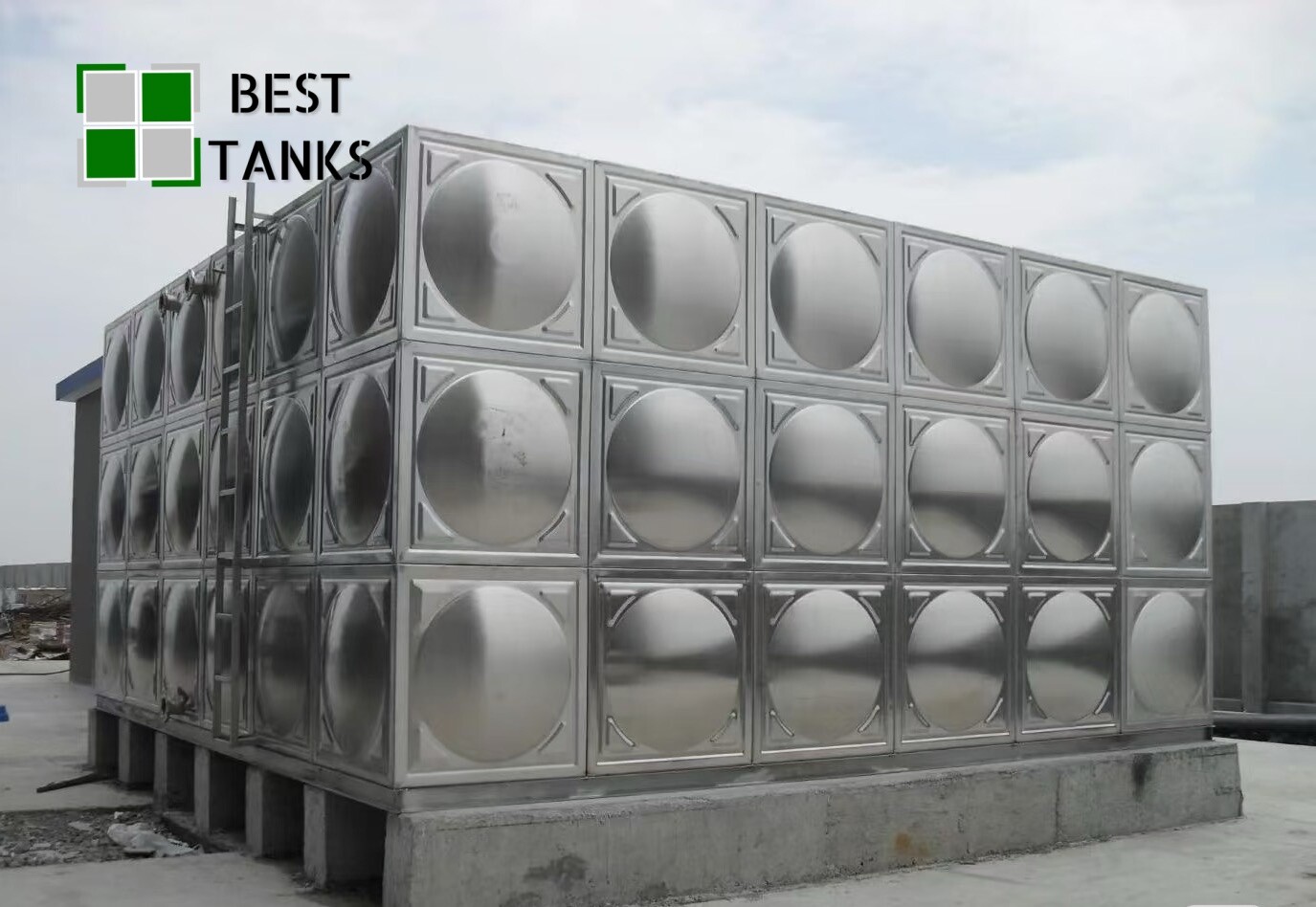
The modular stainless steel water tank for drinking water is engineered to deliver a sanitary, durable, and flexible storage solution for potable water. Constructed from industry-recognised alloys such as 304 and 316 stainless steel, the system is suitable for a wide range of temperatures and meets strict cleanliness demands for municipal, commercial, and industrial applications. The panelised design enables scalable capacities and efficient on-site assembly, while connection options—bolt-connected or argon-welded—offer installers choices based on project priorities such as speed, long-term sealing, and resistance to local water chemistries.
Key Features
- High-grade materials: Available in 304 and 316 stainless steel to provide corrosion resistance and maintain water quality for potable applications.
- Modular construction: Panelised format allows flexible sizing, straightforward transport, and rapid assembly on site.
- Two connection methods: Bolt-connection for reliable modular joining; argon welding for faster, continuous installation where appropriate.
- Sanitary internal finish: Smooth, cleanable surfaces minimise biofilm formation and simplify maintenance.
- Compatibility with water treatment: Suitable for use upstream or downstream of filtration, UV, and reverse-osmosis processes, subject to advice on water chemistry.
- Adaptable applications: From potable water reserves and fire storage to irrigation and process tanks.
Construction and Material Considerations
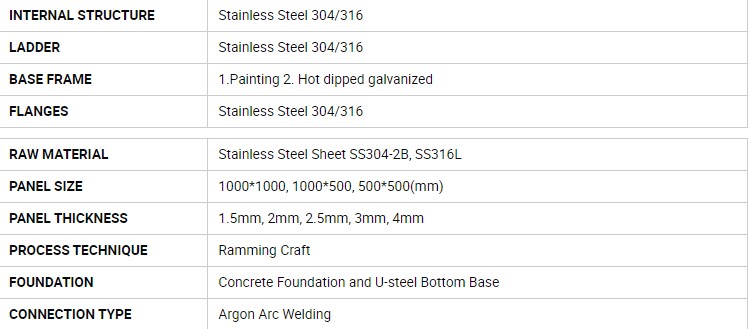
Panels and structural components are fabricated from certified stainless steel grades chosen to balance cost and resistance to specific water chemistries. Type 304 is widely suitable for potable water and general applications. Type 316, with enhanced molybdenum content, is recommended where chloride exposure or more aggressive conditions are anticipated. All internal surfaces are finished to a sanitary grade to facilitate cleaning and reduce microbial attachment. For welded assemblies, argon inert-gas welding is used to achieve consistent seams and faster on-site completion; however, weld zones can experience localized changes in alloy composition that reduce nickel content and thus lower chloride resistance compared with base metal. Where high chloride concentrations or aggressive water are present, careful material selection and joint method assessment are necessary to ensure long-term corrosion resistance.
Connection Types and Installation
Two primary connection methods are available to suit different project requirements:
- Bolt-connection: Prefabricated panels are joined with marine-grade fasteners and gaskets. This method preserves the metallurgical integrity of panel edges and facilitates disassembly, inspection, and replacement of sections when needed.
- Argon-welded connection: Panels are welded together on site using argon-shielded welding techniques to create continuous seams. This approach accelerates installation and can produce a smooth internal surface with minimal crevices, though welded areas should be assessed for susceptibility to chloride-induced corrosion if the stored water has elevated salinity.
Installation Best Practices
- Level, well-draining foundation to prevent deformation and ensure uniform load distribution.
- Proper sealing and sanitary fittings to maintain potable water quality and prevent contamination.
- Consideration of thermal expansion and isolation from dissimilar metals to avoid galvanic corrosion.
Post-installation inspection of welds and bolt joints and routine maintenance protocols.

Benefits and Performance Advantages
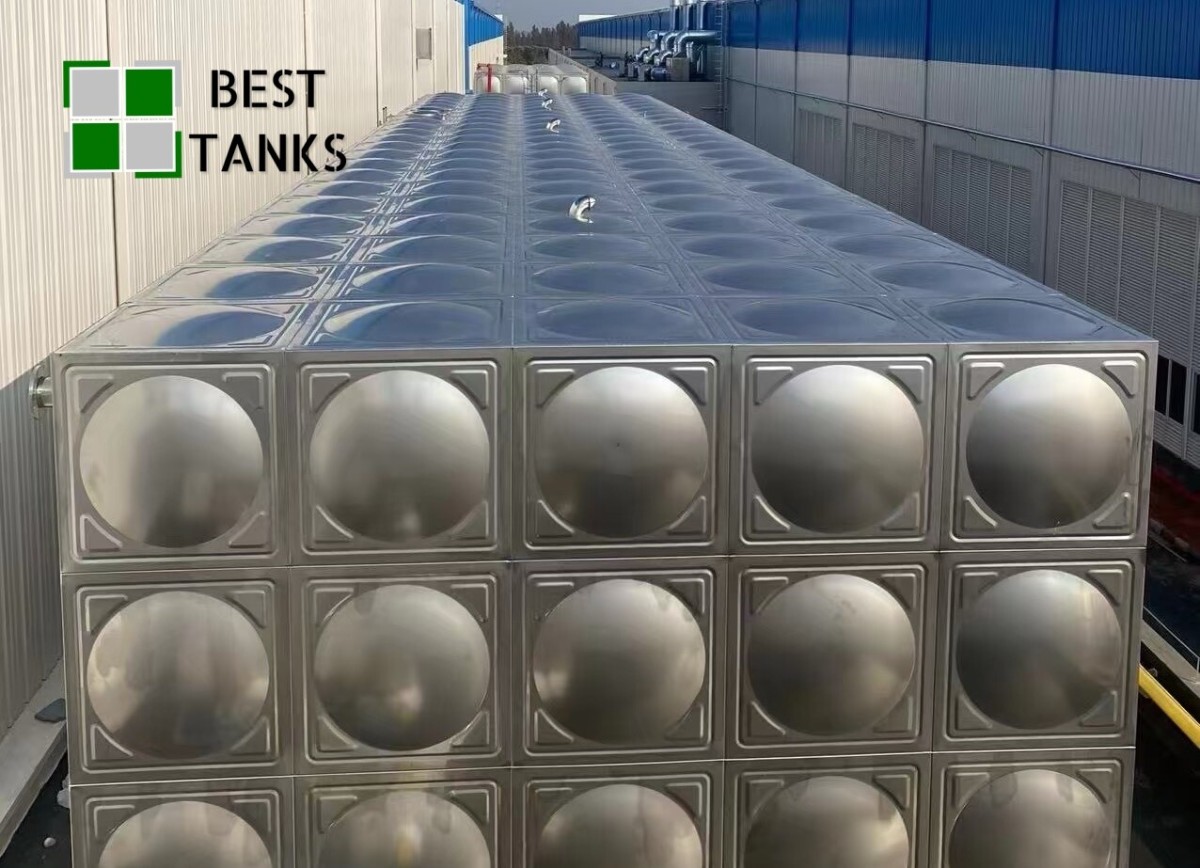
Choosing a stainless steel water tank provides several dependable advantages. Stainless steel offers long service life and predictable mechanical performance under a wide range of environmental conditions. Its non-porous, smooth surfaces are inherently sanitary and easier to disinfect than many alternative materials. Modular tanks reduce on-site labour and logistics costs through prefabrication and allow incremental capacity expansion. The availability of two connection methods ensures that projects with differing priorities—speed, serviceability, or maximum corrosion resistance—can be addressed with a suitable configuration.
Typical Applications
The modular stainless steel water tank is appropriate for diverse scenarios where potable or controlled-quality water storage is essential. Representative applications include:
- Potable water storage for municipal, commercial, and residential supply systems.
- Agricultural irrigation reservoirs and well-water storage.
- Fire reserve and swimming pool balance tanks that demand reliable capacity and hygiene.
- Process and distillation tanks, hot water storage, and chiller or cooling tower make-up water tanks.
- Septic, sewage, and specialized chemical storage where stainless grades and joint choices are matched to contents.
- Reverse-osmosis intermediate storage—applicable for water with high or low conductivity when properly specified and maintained.
Target Users and Decision Factors
This product is designed for water utility engineers, facility managers, project contractors, and design consultants seeking a sanitary, long-lasting storage option. Key decision factors include expected water chemistry (notably chloride levels), installation timeline, maintenance access, and future scalability. Stakeholders should evaluate whether bolt-connection modularity or argon-welded continuity best aligns with operational preferences and site conditions.
Operation, Maintenance and Compatibility Notes
Routine maintenance includes periodic inspection of seals, fasteners or weld seams, and internal cleaning to prevent biofilm and sediment accumulation. Where high chloride concentration water is to be stored, specify 316 grade or consult materials specialists; note that welded points can present localized reductions in corrosion resistance because of altered nickel content in the heat-affected zone. Water treatment upstream can reduce aggressive species and extend service life. Maintain records of inspections and cleaning to comply with potable water standards and ensure traceability for asset management.
Summary
The modular stainless steel water tank for drinking water delivers a robust, sanitary, and adaptable solution for potable and process water storage. By offering both bolt-connected and argon-welded assembly options and utilising 304 or 316 stainless steel, the system can be tailored to specific project needs while meeting high standards for water quality. Proper material selection, attention to water chemistry, and adherence to installation best practices will ensure reliable performance and long service life.
Please give us a message
Please fill out the required information as completely as possible. We will respond to you quickly. During business hours, we typically respond within 2 hours, and within 24 hours at other times.


Please give us a message
Dezhou Best Tanks Co., Ltd - is among the top leaders in panel tanks development and manufacturing in China. Best Tanks offers superior service and a wide range of products of GRP water tank ,galvanized steel water tank and stainless steel water tank and all which have passed WRAS and ISO approval.All production processes using machine production, high efficiency and high quality production.
Best Tanks factory is well-known for GRP water tank, pressed steel water tank and stainless steel water tank with 19 years manufacturing experience.
Best SMC and GRP water tanks have been installed in 74 different countries around the world, such as Australia, Tanzania, Sri Lanka, Philippines, Indonesia, Sudan, Nigeria, Vietnam, Thailand, Myanmar, USA, South Africa, Hong Kong, Japan, Malaysia, Singapore, Brunei, Spain, U.A.E, Saudi Arabia, Kuwait, Qatar, Dubai and etc. We eager to push on every time for ultimate customers satisfaction in all over the world and are responding to the needs of the marketplace, offering high value-added products.
Best Tanks is one of the reliable GRP water tank manufacturers, and is highly experienced in manufacturing top quality GRP water storage tanks. We are focused in GRP water tanks used for storage purposes and we also provide high level services for other different usages and industries. We have top class GRP water tank panels in stock to provide to our clients within a short lead time.