Corrugated Steel Water Tank
Category
Product Detailed Description & Introduction
Overview
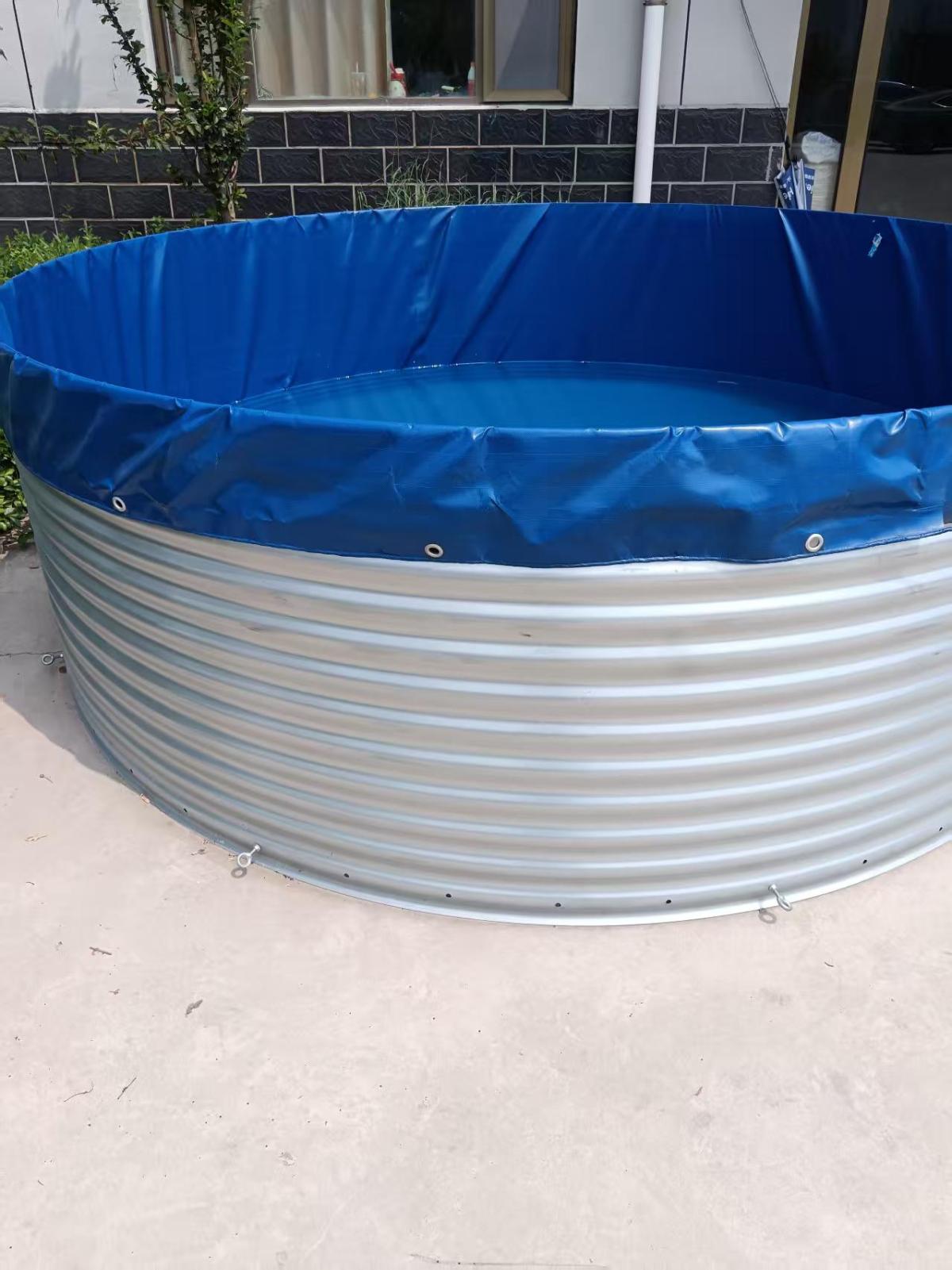
A Corrugated Steel Water Tank is a circular sectional metal tank constructed from corrugated steel wall panels assembled on-site. The product family comprises galvanized corrugated steel (CGS) tanks and zinc‑aluminum alloy tanks (commonly specified to ZMA275 or equivalent standards). Both types are designed for large-volume water storage where cost-efficiency, rapid deployment and reliable structural performance are primary requirements. Typical installations use a food-grade PVC, EPDM or TPU liner to ensure water quality for potable, agricultural and industrial uses.
Materials and Construction
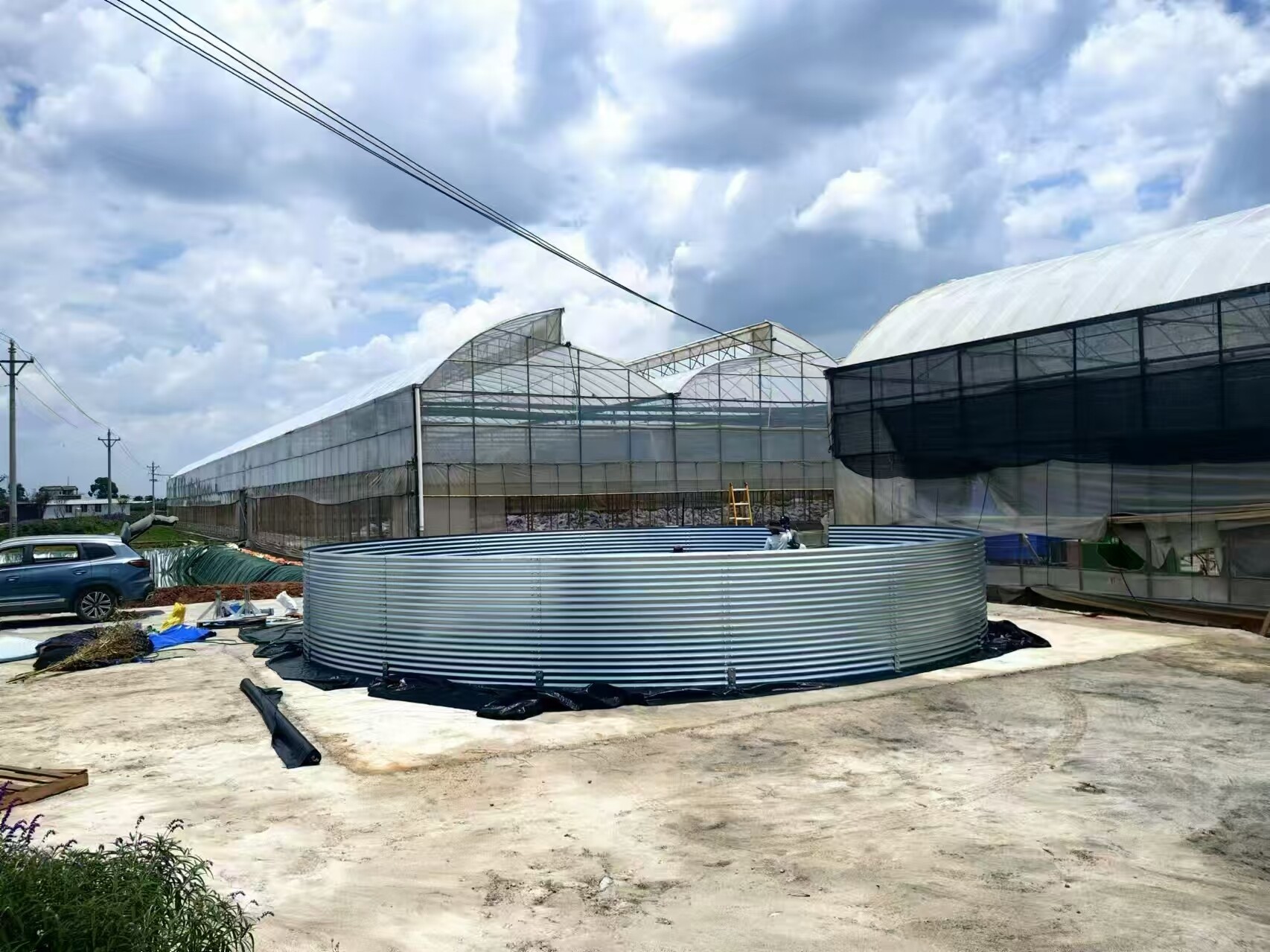
Corrugated panels form the tank wall and are fastened to sectional columns or edge trims to create a continuous circular shell. Walls are completed before the selected liner is lowered and secured. The two primary raw-material options are:
- Galvanized corrugated steel (CGS) produced to Z275 / G90 equivalents—an economical option with a zinc coating around 275 g/m².
- Zinc‑aluminum alloy coated steel (ZMA275 standard or similar) that includes higher aluminum content to improve corrosion resistance while maintaining comparable mechanical strength to traditional coatings.
Liner and Internal Waterproofing
A food-grade liner protects water quality and isolates the metal from direct contact with stored fluids. Common liner materials are:
- PVC (Polyvinyl Chloride) — cost-effective, widely used for potable and irrigation storage when certified to food-contact standards.
- EPDM (Ethylene Propylene Diene Monomer) — excellent flexibility, UV and weather resistance, suitable for long-term exposure and variable temperatures.
- TPU (Thermoplastic Polyurethane) — high abrasion resistance and strong seam performance, often chosen for aggressive or industrial water applications.
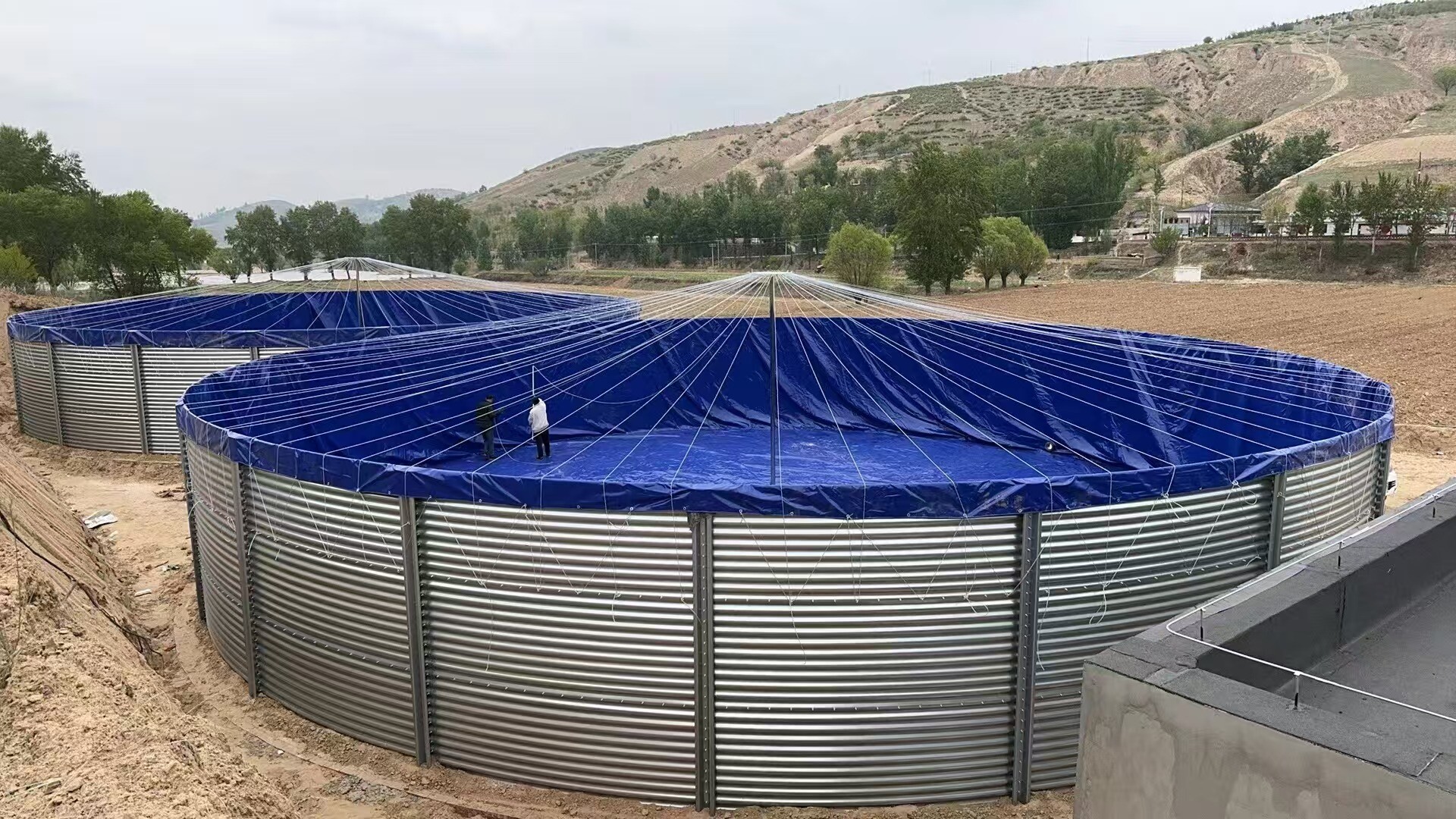
The liner is installed after panel assembly: it is lowered, evenly spread, secured at the rim, seams are inspected, folds smoothed and the tank filled gradually to perform a watertightness test.
Zinc‑Aluminum vs Corrugated Galvanized Steel: Material Comparison
- Durability: Zinc‑aluminum coatings provide a protective aluminum oxide layer in addition to sacrificial zinc protection. This hybrid barrier improves long-term corrosion resistance compared with standard galvanized coatings.
- Corrosion resistance: In humid, coastal or chemically aggressive environments, zinc‑aluminum alloy performs better due to the aluminum component reducing galvanic attack.
- Cost: Corrugated galvanized steel tanks are generally less expensive up front. Zinc‑aluminum coated steel has a higher initial cost but a lower lifecycle maintenance burden in corrosive settings.
- Maintenance: Zinc‑aluminum requires less frequent intervention. CGS tanks should be inspected periodically to detect coating wear, scratches or beginning stages of corrosion.
- Appearance and application: Zinc‑aluminum often has a sleeker finish and is chosen where aesthetics and longevity are priorities; CGS has a more industrial look and suits rural, agricultural or temporary installations where cost-effectiveness is essential.
Key Advantages
Corrugated Steel Water Tanks deliver a combination of attributes that make them a preferred choice across multiple sectors. Primary advantages include:
- High structural strength: Corrugation increases panel stiffness and helps distribute loads, improving resistance to wind, snow and external impacts.
- Cost-effectiveness: Reduced raw material per unit of stored volume and simplified on-site assembly translate into competitive project costs compared to concrete or other rigid tanks.
- Modularity: Tanks are sectional and prefabricated, allowing rapid assembly, future expansion and straightforward replacement of components when required.
- Long service life: With proper selection of coating and liner, these tanks will provide dependable storage for over 20 years.
- Seismic performance: The flexible corrugated shell combined with engineered reinforcement provides resilience in seismic-prone zones by dissipating energy and reducing brittle failure risk.
- Eco-friendliness: Steel components are recyclable and liner choices can support reusability and reduced contamination, aligning with sustainability objectives.
Available Tank Types & Roof Configurations
Corrugated Steel Water Tanks can be specified with a variety of top configurations to meet access, contamination control and usage requirements:
- Steel Dome Roof: A fully enclosed steel dome prevents airborne contaminants, reduces evaporation, and is the preferred solution for potable water and long-term storage.
- Open Top: Allows easy access for aquaculture, rainwater harvesting, or operations where frequent surface access is required. Open-top tanks must be managed to minimize contamination and mosquito breeding.
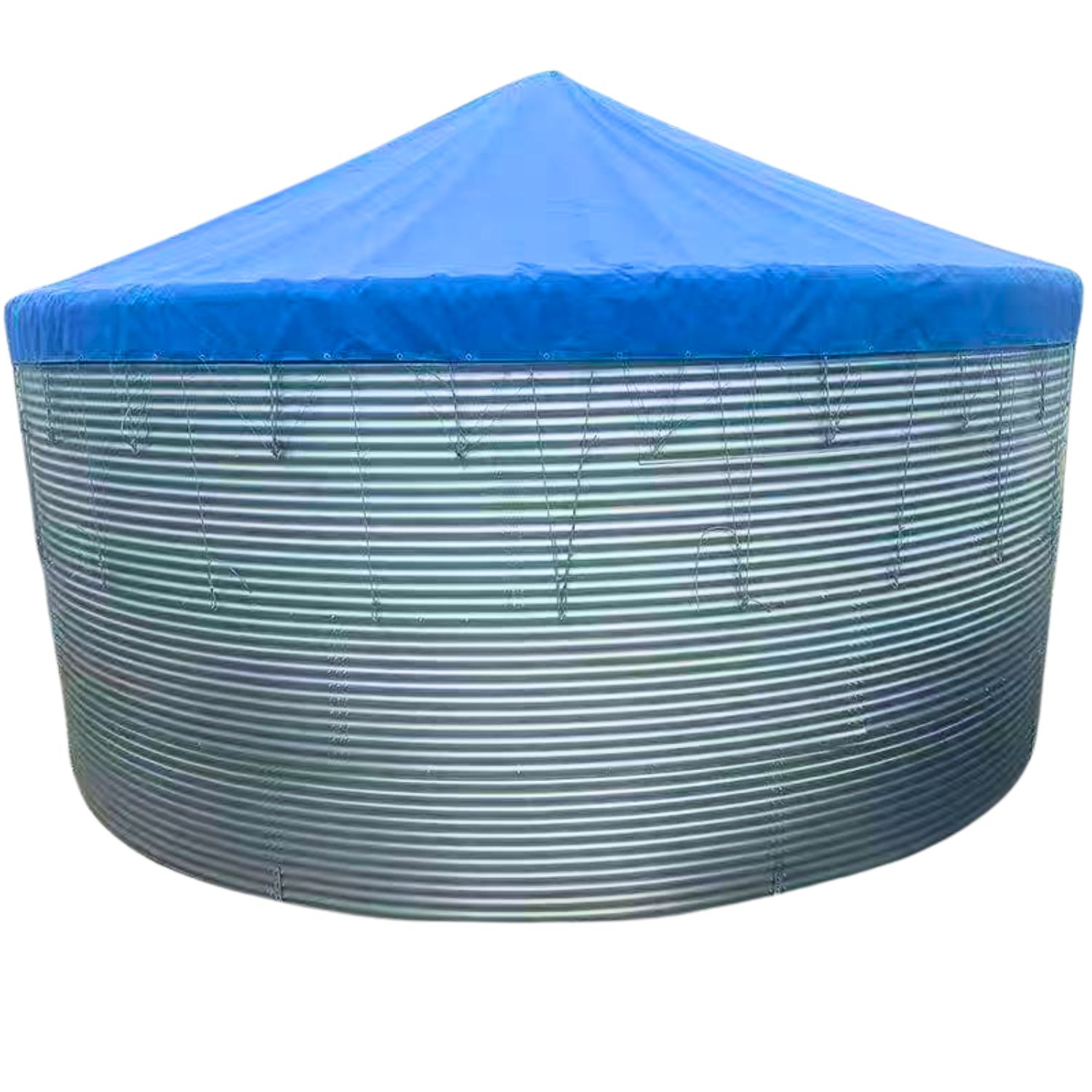
- PVC-Covered Roof: Cost-effective protective cover that reduces debris ingress and UV exposure. Often used in agricultural and industrial applications where a fully rigid roof is not required.
Selecting the Right Capacity and Dimensions
Choosing the correct diameter and height is driven by storage needs, available footprint and local site constraints. The included capacity table enables a direct cross-reference to determine the approximate volume for a given diameter and water depth. When selecting a tank, consider:
- Peak demand vs average use: Size for peak daily or emergency demand and use the remainder for operational buffer.
- Available site area: Larger diameters reduce height for the same volume but require more horizontal space.
- Transport and assembly logistics: Larger diameter panels and reinforcements may require heavier handling equipment on site.
- Future expansion: Modular construction allows staged expansion by adding rings to increase depth or by installing a new adjacent tank.
Professional Installation Guidelines (4.52m High Example)
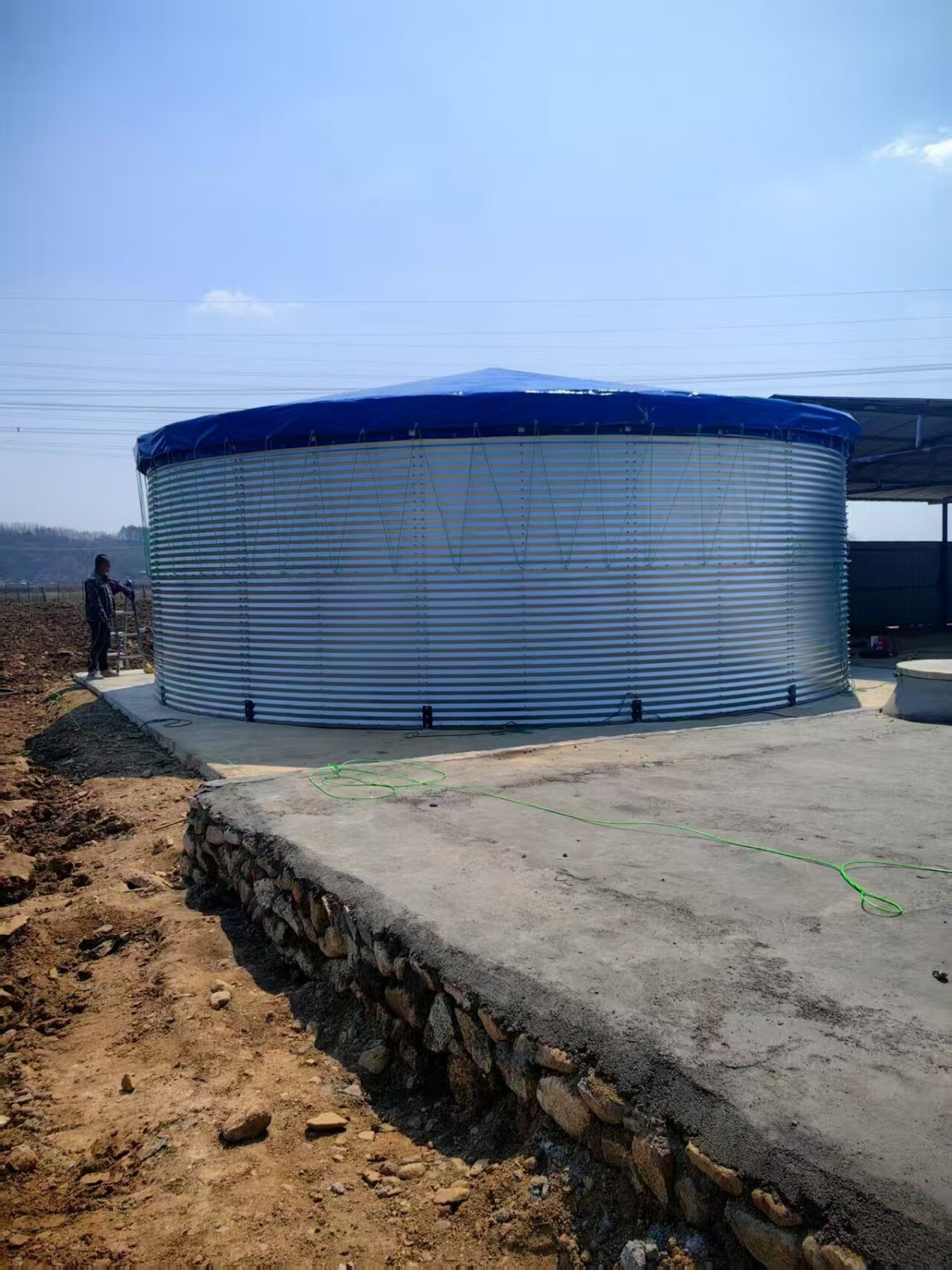
All tank deliveries include a detailed drawing, step-by-step installation manual and instructional video. For tanks at or above 4.52 m in height, our standard practice is to integrate external reinforcement elements—these may include reinforcement rings, additional buttresses or bolted bracket assemblies—to improve lateral stiffness and overall structural stability. Tanks 3.41 m and lower typically do not require external reinforcement, relying instead on the engineered capacity of corrugated panels.
Typical installation steps are:
- Prepare a level, well-compacted foundation with drainage as required by local geotechnical recommendations.
- Assemble base ring and successive corrugated panels, fastening per the provided torque specifications and sequencing.
- Install reinforcement elements for tanks ≥4.52 m where specified; verify plumb and circularity.
- Lower the selected liner into the assembled shell, secure to rim details, smooth folds and ensure seams are sealed according to liner manufacturer instructions.
- Perform a staged fill and leak test. Inspect seams, fixings and liner anchorage points before full commissioning.
Applications and Use Cases
Corrugated Steel Water Tanks are versatile and find use across multiple sectors. Representative applications include:
- Agriculture & Irrigation: Rainwater harvesting, irrigation reservoirs, livestock water storage and greenhouse water supply.
- Municipal Supply: Rural or peri-urban potable water storage when paired with appropriate liners and coatings, meeting regulatory requirements.
- Fire Protection: Dedicated fire reserve tanks for industrial, commercial and community fire suppression systems.
- Industrial Process & Cooling Water: Process water, cooling towers make-up, and temporary storage for plant operations.
- Emergency & Humanitarian Use: Rapidly deployable long-term water reserve for disaster response or remote sites.
- Aquaculture: Fish farming, hatcheries and related operations benefit from controlled water volumes and easy access when using open-top configurations.
Maintenance, Inspection & Expected Lifespan
With correct material selection and routine care, corrugated steel water tanks typically provide more than 20 years of reliable service. Maintenance recommendations include:
- Annual inspections of external coatings, fasteners and liner condition. Look for wear, mechanical damage, or loss of coating integrity.
- Liner checks after seasonal changes and following any internal works. Maintain sanitary practices for potable water tanks.
- Prompt repair of scratches, local corrosion or compromised seams to prevent progressive deterioration.
- Water quality monitoring in potable systems to ensure compliance with local regulations and public health standards.
Customization & Accessories
We support tailored solutions to match site-specific needs. Common custom options include:
- Reinforced rims and bolted rims for liner anchorage.
- Manways, ladders, platforms and safety railings.
- Instrumentation such as level sensors, overflow protection, and sampling ports.
- Internal fittings for pumps, inlet diffusers and outlet piping coordinated with liner penetrations.
- Surface treatment options, including additional paint systems for enhanced UV resistance or color matching to local requirements.
Regulatory and Water Quality Considerations
When specifying a tank for potable water, select liners certified for food-contact use and ensure all internal fittings and coatings meet the relevant potable water standards in your jurisdiction. For industrial or agricultural storage, select liner materials compatible with the intended fluid and follow local discharge and handling regulations.
Ordering Guidance
When requesting a quotation, provide the following information to ensure an accurate specification and price:
- Required storage volume and preferred tank footprint or maximum available diameter.
- Intended water use (potable, irrigation, fire reserve, industrial) and any regulatory standards to meet.
- Site conditions including seismic zone, proximity to the coast, elevation and access constraints.
- Preferred material (CGS or zinc‑aluminum) and liner choice (PVC, EPDM, TPU).
Any required accessories such as roofs, covers, instrumentation or reinforced bases.
Product Parameters
The capacity table below lists representative cylindrical tank volumes based on assembled internal diameter and water depth. Use this as a quick reference when selecting a Corrugated Steel Water Tank for your project. All volumes are cubic meters (m3).
Frequently Asked Questions (Concise Technical Answers)
Is a liner necessary?
Yes for potable water and most agricultural uses. Liners protect water quality and isolate the steel from corroding fluids. Select a certified food-grade liner for drinking water applications.
How long will a tank last?
With suitable coating, correct liner selection and routine maintenance, expect a service life exceeding 20 years. Life expectancy depends on environmental exposure and maintenance regime.
Can tanks be relocated?
Tanks are sectional and can be dismantled and reassembled, but logistics and costs depend on size and liner condition. Relocation is feasible but should be planned to minimize liner damage and rework.
Summary
Corrugated steel water tanks offer a pragmatic balance of strength, speed of installation and cost-efficiency for a wide range of water storage needs. Choosing between galvanized and zinc‑aluminum coated steel depends on local environmental exposure, budget and long-term maintenance strategy. When combined with the appropriate liner—PVC, EPDM or TPU—these tanks are suitable for potable water, agricultural irrigation, industrial storage, fire reserves and aquaculture. For most projects, the modular nature and recyclable composition of corrugated steel tanks make them a sustainable long-term solution.
Please give us a message
Please fill out the required information as completely as possible. We will respond to you quickly. During business hours, we typically respond within 2 hours, and within 24 hours at other times.


Please give us a message
Best Tanks factory is well-known for GRP water tank, pressed steel water tank and stainless steel water tank with 19 years manufacturing experience.
Best SMC and GRP water tanks have been installed in 74 different countries around the world, such as Australia, Tanzania, Sri Lanka, Philippines, Indonesia, Sudan, Nigeria, Vietnam, Thailand, Myanmar, USA, South Africa, Hong Kong, Japan, Malaysia, Singapore, Brunei, Spain, U.A.E, Saudi Arabia, Kuwait, Qatar, Dubai and etc. We eager to push on every time for ultimate customers satisfaction in all over the world and are responding to the needs of the marketplace, offering high value-added products.
Best Tanks is one of the reliable GRP water tank manufacturers, and is highly experienced in manufacturing top quality GRP water storage tanks. We are focused in GRP water tanks used for storage purposes and we also provide high level services for other different usages and industries. We have top class GRP water tank panels in stock to provide to our clients within a short lead time.